In the modern B2B landscape, sales and marketing teams are rarely starved for leads; they are starved for focus. To build a truly scalable revenue engine, forward-thinking enterprises are transitioning to advanced B2B lead scoring machine learning models. High-growth organizations generate thousands of inbound touchpoints each month via content downloads, webinar registrations, product trials, and contact forms. However, treating every lead with equal urgency burns out sales development representatives (SDRs) and squanders high-value opportunities.
While lead scoring has long been the standard remedy for prioritization, traditional rule-based methods are failing to keep pace with complex, multi-stakeholder buyer journeys. To build a truly scalable revenue engine, forward-thinking B2B enterprises are transitioning to automated, predictive lead scoring powered by machine learning (ML).
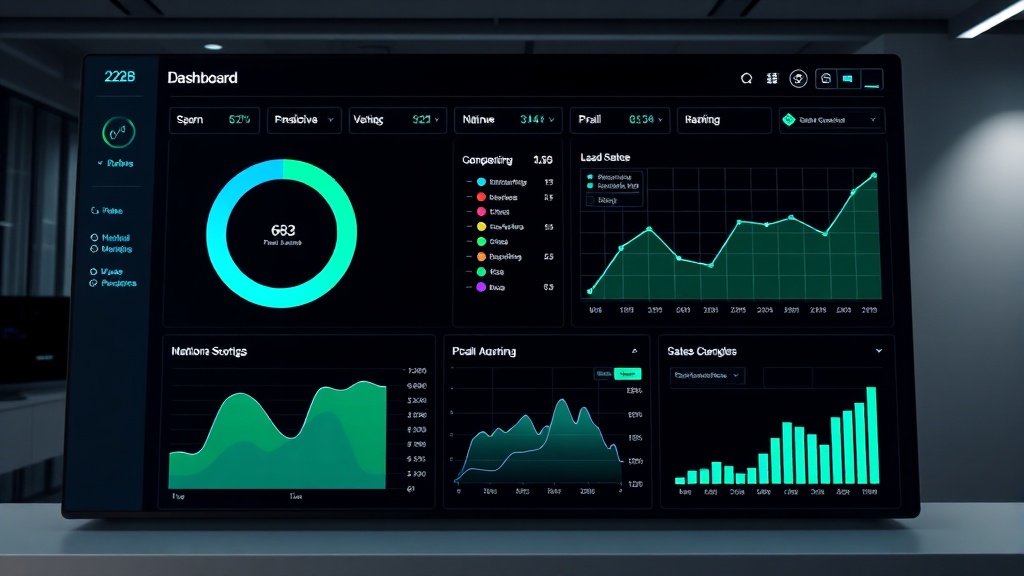
How Machine Learning Transforms B2B Lead Scoring
For years, marketing automation platforms relied on heuristic models: assign 10 points for a job title containing “Director,” 5 points for an email click, and 20 points for visiting the pricing page. While intuitively logical, this approach has severe architectural flaws:
- Static and Subjective: Point allocations are typically based on gut feelings rather than empirical correlation with closed-won revenue.
- Inability to Capture Non-Linear Buyer Journeys: A prospect rarely moves through a linear funnel. Point-accumulating systems often reward “tire kickers”—students, researchers, or low-intent browsers who consume vast amounts of content—while missing silent, high-intent buyers who only view three critical pages. Implementing robust B2B lead scoring machine learning models completely solves this visibility issue.
- Maintenance Overhead: As product lines expand and ideal customer profiles (ICPs) shift, manually updating complex scoring rules across marketing automation workflows becomes an operational nightmare.
How Predictive Machine Learning Models Transform Lead Scoring
Predictive lead scoring replaces human guesswork with mathematical probability. Instead of an arbitrary points threshold, ML models analyze thousands of historical data points to predict the exact likelihood that an incoming account or lead will convert into a paying customer.
These models evaluate multi-dimensional datasets simultaneously:
- Firmographic & Technographic Data: Company size, annual revenue, industry vertical, tech stack composition, and funding stage (often enriched via tools like Clearbit, ZoomInfo, or Apollo).
- Behavioral & Engagement Data: Recency, frequency, and monetary-like value of digital interactions, including depth of documentation visits, product trial telemetry, and session duration.
- Third-Party Intent Signals: External web activity showing that target accounts are actively researching competitors or industry-specific pain points (via platforms like Bombora or G2).
By passing these features into supervised machine learning algorithms—such as Gradient Boosting (XGBoost), Random Forests, or Logistic Regression—the system discovers latent patterns that humans cannot see. For example, the model might discover that a technical lead from a 200-person SaaS company who visits the API documentation twice has a 4x higher win probability than a VP of Operations from an enterprise firm who only attended a high-level webinar. Implementing automated B2B lead scoring helps sales teams prioritize high-intent prospects effortlessly.
Key Benefits of an ML-Driven Lead Scoring Engine
Transitioning from manual scoring to an automated predictive engine drives quantifiable gains across the entire Go-To-Market (GTM) motion:
1. Exponential Increases in Sales Velocity
By dynamically ranking leads in real time, ML models route the highest-propensity prospects to account executives immediately. This drastically cuts down time-to-first-touch, which is historically one of the strongest determinants of conversion rates.
2. Elimination of Sales-Marketing Friction
Disputes over “lead quality” are common in B2B organizations. Marketing claims high MQL volume; sales claims the leads are unqualified. Predictive models objectively anchor lead definitions to historic closed-won conversion data, establishing a data-backed Service Level Agreement (SLA) between both teams.
3. Continuous Self-Optimization
Unlike static rules, machine learning pipelines can be trained continuously or at regular cadences (e.g., bi-weekly or monthly). As market dynamics shift, new products launch, or buyer personas evolve, the model automatically adjusts feature weights to reflect current realities.
Architectural Blueprint for Implementation
Building a scalable predictive lead scoring engine involves four foundational stages:
 [ Data Ingestion ] ➔ [ Feature Engineering ] ➔ [ Model Training/Evaluation ] ➔ [ CRM Integration ]
 CRM, MAP, Intent Recency, Frequency, XGBoost / LightGBM, Real-Time Lead
 & Web Analytics Behavioral Ratios Validation (AUC-ROC) Scoring & Routing
- Unified Data Ingestion: Aggregate data from your Customer Relationship Management (CRM) platform, Marketing Automation Platform (MAP), and web analytics into a central data warehouse (e.g., Snowflake, BigQuery).
- Feature Engineering: Transform raw data into predictive indicators. Key features often include decay metrics (behavior weighted by recency), velocity metrics (actions taken within the last 72 hours), and fit ratios (alignment to historical ICP).
- Model Selection and Training: Split historical data into training and test sets. Optimize for metrics like AUC-ROC (Area Under the Receiver Operating Characteristic) and Precision-Recall rather than raw accuracy, especially given that conversion events are often rare classes in B2B datasets.
- Closed-Loop CRM Integration: Surface the predictive score—and crucially, the factors driving it—directly inside the sales rep’s interface (e.g., Salesforce or HubSpot).
Overcoming Implementation Challenges: Explainability and Trust
The most sophisticated model in the world provides no value if sales representatives do not trust its output. One of the primary barriers to adoption is the “black box” nature of complex algorithms.
To overcome this, organizations must leverage model explainability techniques such as SHAP (SHapley Additive exPlanations). Instead of merely handing an SDR a score of “88/100,” the interface should display the top positive and negative drivers behind that score:
- +15: Company uses competitive cloud infrastructure.
- +12: Visited enterprise pricing page three times in 48 hours.
- -8: Non-corporate email domain used during initial sign-up.
When sales professionals understand why a lead is hot, they can tailor their outreach messaging with surgical precision, accelerating the pipeline from the very first conversation.
Moving from Intuition to Predictive Precision
Automating lead scoring using predictive machine learning is no longer a luxury reserved for the world’s largest tech conglomerates. Accessible cloud infrastructure, automated feature stores, and modern enrichment APIs have democratized predictive capabilities for mid-market and enterprise B2B players alike.
By replacing arbitrary point systems with dynamic, data-driven intelligence, organizations can optimize operational spend, energize their sales teams, and capture maximum revenue in an increasingly competitive marketplace. Ultimately, adopting predictive B2B lead scoring drives sustainable pipeline growth.