Providing round-the-clock customer support with automated voice agents was once a luxury reserved for enterprise organizations with massive operational budgets. Staffing night shifts, managing international call centers, and maintaining legacy Interactive Voice Response (IVR) systems required significant capital and technical overhead.
Today, advances in conversational artificial intelligence have fundamentally altered this dynamic. Small-to-midsize businesses (SMBs) and lean startups can now build and deploy intelligent, human-sounding automated voice agents that handle inbound and outbound phone inquiries 24/7. Best of all, this can be achieved without hiring dedicated engineering teams or committing to six-figure software contracts.
Here is a practical guide on how to architect, build, and deploy an automated voice support system on a lean budget.
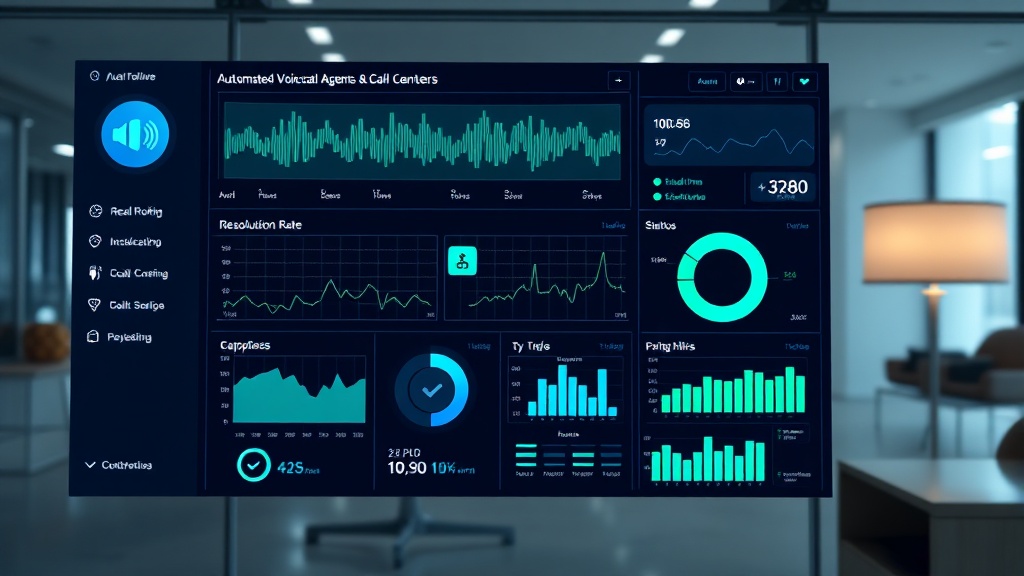
Deconstructing the Modern Stack Behind Automated Voice Agents
To build a cost-effective voice agent, it is essential to understand the underlying infrastructure. Modern voice agents no longer rely on rigid, decision-tree IVR menus (“Press 1 for Sales”). Instead, they operate via a pipeline of four distinct layers:
- Telephony: Connects the system to the public switched telephone network (PSTN) via Session Initiation Protocol (SIP) or virtual phone numbers.
- Speech-to-Text (STT): Transcribes the caller’s spoken words into text in real time.
- Large Language Model (LLM): Processes the transcribed text, understands intent, applies business logic, and generates a context-aware response.
- Text-to-Speech (TTS): Converts the model’s text response back into natural, low-latency audio.
Historically, orchestrating these components required extensive custom engineering to maintain low latency. Today, modular platforms bundle these layers into developer-friendly APIs or visual workflow builders, dramatically lowering the barrier to entry. Deploying automated voice agents
eliminates long hold times and ensures every inbound call is answered immediately.
Choosing Lean, Pay-As-You-Go Platforms
Building a voice agent on a budget means avoiding enterprise contracts with high monthly minimums. Instead, look toward pay-as-you-go providers where you are billed strictly for the minutes used.
Depending on your team’s technical expertise, there are two primary routes:
Developer-First Voice Orchestrators
If you have basic programming knowledge (Python, JavaScript) or an in-house developer, platforms like. Vapi, Retell AI, and Bland AI handle real-time orchestration, latency optimization, and interruption handling out of the box.
- Cost: Typically $0.05 to $0.15 per minute, plus underlying model fees.
- Flexibility: Allows you to plug in your own API keys for providers like Deepgram (STT), OpenAI or Anthropic (LLM), and Cartesia or ElevenLabs (TTS).
No-Code AI Phone Builders
For non-technical operators, platforms like Synthflow AI or Air AI offer graphical user interfaces. You can map out call logic, integrate appointment schedulers, and sync customer data without writing a line of code.
- Cost: Slightly higher markups per minute or low monthly subscription tiers, but eliminates upfront development costs.
Defining a Narrow, High-Impact Scope
The fastest way to exceed your budget—and frustrate customers—is trying to build a voice agent that handles every possible edge case. Instead, design your agent to excel at Tier-1 queries, which typically represent 60% to 80% of inbound support volume.
Focus on tasks such as:
- Answering common business FAQs (hours, location, return policies).
- Checking order or ticket statuses via simple API lookups.
- Booking, rescheduling, or canceling appointments.
- Triaging urgent calls and collecting contact details for human follow-up.
By limiting the scope, your system prompts remain concise, reducing token consumption costs while drastically improving response accuracy.
Engineering Natural Prompts and Latency Controls
In voice conversations, latency is the difference between a natural interaction and an awkward, robotic experience. Callers expect responses within 500 to 800 milliseconds.
To keep performance high and operational costs low, implement these prompt engineering best practices:
- Enforce Brevity: Instruct the LLM to speak in short, conversational sentences. For example: “You are an AI phone assistant for [Company]. Keep answers under two sentences. Do not use bullet points or lists.” Short responses generate faster and consume fewer output tokens.
- Use Smaller, Faster Models: Instead of defaulting to large, expensive models like GPT-4o, test smaller models such as GPT-4o-mini, Claude 3.5 Haiku, or open-source models hosted on Groq. These offer lightning-fast time-to-first-token (TTFT) at a fraction of the cost.
- Implement Clear Guardrails: Provide strict instructions on what the agent should do when it encounters an unknown question. It should gracefully admit uncertainty rather than hallucinating answers.
Designing Fail-Safes and Human Handoffs
An automated voice agent should supplement your team, not act as a walled garden that traps frustrated callers. To maintain customer trust without increasing costs, configure reliable fail-safes:
- Warm Transfers: If the caller requires human escalation during business hours, configure the agent to initiate a SIP transfer to an on-call agent or desk line.
- Asynchronous Ticketing: Outside of business hours, the agent can summarize the conversation and submit a support ticket via webhook into your existing CRM (such as Zendesk, HubSpot, or a simple Slack channel).
- SMS Integration: For complicated links or instructions, configure your agent to trigger an automated SMS (via Twilio or your voice platform) directly to the caller’s mobile device during the call.
Monitoring Costs and Continuous Improvement
Once your voice agent is live, regular optimization ensures operational efficiency:
- Review Call Transcripts: Identify patterns where the agent struggled or misunderstandings occurred. Refine your system prompt and knowledge base weekly based on real user interactions.
- Monitor Token Economics: Regularly review billing dashboards. Optimize your context window by caching system prompts and eliminating unnecessary context data.
- Track First-Contact Resolution (FCR): Measure how many calls are successfully resolved without human intervention. A well-tuned budget agent should reliably resolve routine queries at a cost of roughly $0.15 to $0.30 per completed call—a negligible fraction of the cost of human-staffed answering services.
Pairing automated voice agents for phone calls with agentic AI workflows for email triage allows small businesses to deploy reliable automated voice agents and scale customer support seamlessly. Ultimately, implementing automated voice agents gives growing businesses enterprise-grade phone support at a fraction of traditional staffing costs.