For modern retailers, multi-channel growth has created unprecedented operational complexity. Managing stock across e-commerce storefronts, third-party marketplaces, regional distribution centers, and physical footprints requires orchestrating an intricate web of supply andemand.
Historically, inventory planning relied on retrospective data, static spreadsheets, and broad-brush seasonal assumptions. Today, that playbook is broken. As customer expectations for same-day delivery and seamless omnichannel fulfillment rise, automated inventory forecasting has transformed from a back-office optimization tool into a core strategic engine.
Here is how the next generation of automated forecasting is reshaping multi-channel retail networks.
The Cracks in Conventional Multi-Channel Forecasting
The fundamental challenge of multi-channel retail is inventory fragmentation. When a brand sells via D2C, wholesale, Amazon, and physical brick-and-mortar stores, demand signals arrive simultaneously from disparate sources.
Legacy enterprise resource planning (ERP) systems frequently treat these channels as separate silos. This leads to the classic retail dilemma: a product is stocked out online while sitting idle on a store shelf three miles away from the customer, or excess safety stock is held across all nodes, tying up working capital and inflating carrying costs.
Furthermore, traditional models struggle with volatility. They cannot quickly adjust to sudden supply chain disruptions, micro-trends driven by social commerce, or localized demand shocks. By the time a planner notices an anomaly, the stockout has already occurred, or dead inventory has already accumulated.
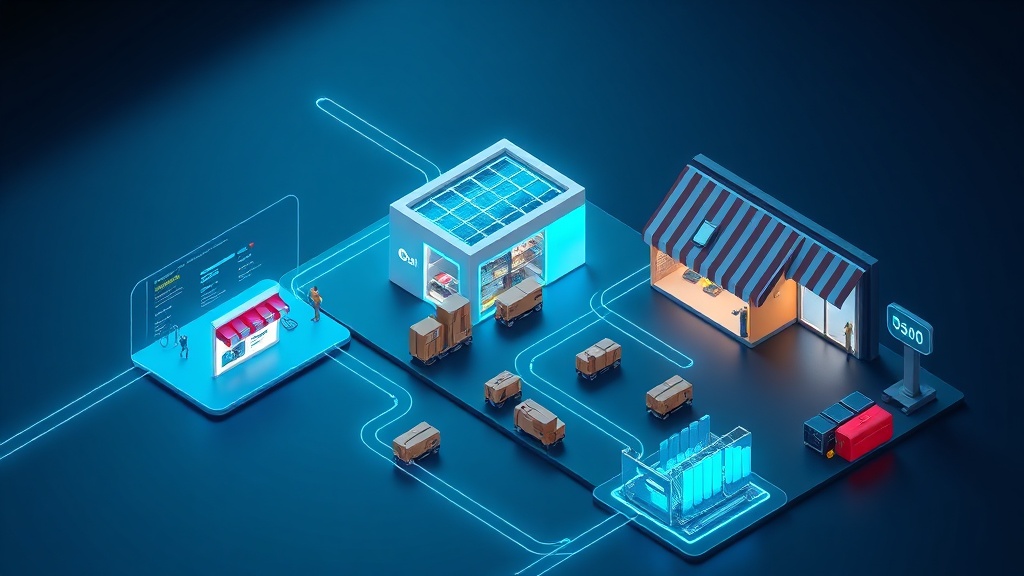
Demand Sensing: Moving from Reactive to Predictive AI
The future of forecasting lies in transitioning from static “demand planning” to real-time “demand sensing.” Rather than merely extrapolating historical sales patterns, modern automated platforms leverage machine learning (ML) models that ingest hundreds of external and internal demand drivers concurrently.
These automated engines analyze:
- Micro-level consumer behavior: Real-time cart abandonment rates, product page views, and search intent signals.
- External catalysts: Hyper-local weather patterns, geopolitical disruptions, inflationary pressures, and localized demographic shifts.
- Marketing velocity: Ad spend pacing, promotional calendars, and influencer-driven conversion surges across platforms like TikTok Shop and Instagram.
By continuously analyzing these multivariate signals at the SKU-location level, automated platforms can forecast demand shifts days or weeks before they manifest in point-of-sale (POS) data, significantly shrinking the margin of error.
Dynamic Multi-Echelon Inventory Optimization (MEIO)
Forecasting demand accuracy is only half the battle; the other half is determining where that inventory should physically sit. The next frontier in automated systems is the synthesis of forecasting with Multi-Echelon Inventory Optimization (MEIO).
In a complex fulfillment network consisting of mother hubs, regional fulfillment centers (RFCs), dark stores, and retail locations, automated systems continuously recalculate optimal buffer stock levels across every node.
Instead of buffering against uncertainty with massive safety stock at every location, automated MEIO models treat the network holistically. If an algorithm senses a spike in D2C orders for a specific apparel line in the Pacific Northwest, it can automatically recommend—or execute—the rebalancing of inventory from a slower-moving wholesale distribution hub to an urban micro-fulfillment center, balancing fulfillment speed against transit cost.
The Rise of Autonomous “Self-Healing” Supply Chains
We are rapidly moving from decision-support systems (software that shows a human planner what to do) to autonomous execution (software that takes the action within guardrails).
In an autonomous forecasting ecosystem, routine replenishment decisions require zero manual intervention. When projected inventory dips below dynamically adjusted thresholds, the system automatically issues purchase orders to suppliers, reserves freight capacity, and adjusts shipping parameters based on real-time supplier lead times.
When disruptions occur—such as a port delay or a manufacturing bottleneck—the forecasting engine dynamically recalculates projected arrival dates, re-allocates existing inventory across channels based on margin priority, and flags only high-stakes exceptions for human intervention. Planners shift their focus from mechanical data crunching to strategic supplier relationship management and network design.
Sustainable Margins and Reduced Operational Waste
Aside from customer satisfaction, automated inventory forecasting directly impacts the bottom line through working capital efficiency and sustainability:
- Drastic Markdown Reduction: Over-forecasting leads to steep clearance discounting, which erodes brand equity and margin. Algorithmic precision aligns procurement directly with real demand velocity.
- Lower Logistics Emissions: Misallocated inventory causes split shipments, long-haul cross-docking, and expensive expedited air freight. Positioning stock near the final delivery node via accurate forecasting reduces the carbon footprint per parcel.
- Minimized Waste: In categories like perishable goods, beauty, and rapid-turn fashion, automated forecasting radically reduces spoilage and deadstock destined for landfills.
Building the Foundation for Automated Forecasting
Transitioning to automated inventory forecasting is not a plug-and-play software installation; it requires structural readiness across three key areas:
- Unified Data Architecture: AI models require clean, harmonized data. Retailers must eliminate silos between e-commerce platforms, POS systems, warehouse management systems (WMS), and enterprise inventory data.
- Channel-Agnostic Inventory Ownership: Organizational structures that pit the “e-commerce team” against the “retail stores team” for stock allocation will handicap any automated system. Inventory must be viewed as a unified corporate asset.
- Change Management: Automation requires planners to trust algorithmic recommendations. Organizations must foster an analytical culture that transitions from “gut-feel” planning to managing by exception.
The Path Forward for Automated Inventory Forecasting
The gap between retailers running on legacy, backward-looking forecasting and those powered by real-time predictive automation is widening rapidly. In a retail landscape defined by compressed delivery windows, fragmented consumer touchpoints, and volatile supply networks, automated inventory forecasting is no longer an experimental initiative. It is the architectural foundation of resilient, profitable, and scalable multi-channel commerce.