In an era defined by rapid regulatory change and explosive data growth, implementing automated AI legal assistants is transforming corporate compliance audits from a reactive, labor-intensive burden into a proactive strategic advantage. Automated AI legal assistants are transforming corporate compliance audits in an era defined by rapid regulatory change and explosive data growth.
Traditional audit workflows, characterized by manual sampling and tedious document reviews, are no longer sufficient to keep pace. To mitigate exposure and maintain governance standards, organizations are increasingly turning to automated AI legal assistants to streamline their compliance audits, turning a historically reactive process into a strategic, data-driven discipline.
How Automated AI Legal Assistants Transform Audit Execution
Corporate compliance audits have historically been resource-intensive endeavors. Legal teams must sift through disparate silos of unstructured data—ranging from enterprise resource planning (ERP) logs and internal communications to supplier master service agreements (MSAs)—to verify adherence to frameworks like GDPR, HIPAA, SOX, and emerging ESG standards.
Several factors have made legacy audit methodologies obsolete:
- Regulatory Velocity: Global regulatory bodies introduce thousands of updates annually. Tracking these changes against existing contractual obligations manually is functionally impossible.
- Sampling Limitations: Traditional audits rely on statistical sampling, reviewing perhaps 5% to 10% of a company’s total contracts or transactions. This leaves an unacceptably high margin for unidentified non-compliance.
- Operational Bottlenecks: Highly qualified legal counsel often spend hundreds of billable or salaried hours performing low-complexity document reviews rather than focusing on high-level risk strategy.
How AI Legal Assistants Transform Audit Execution
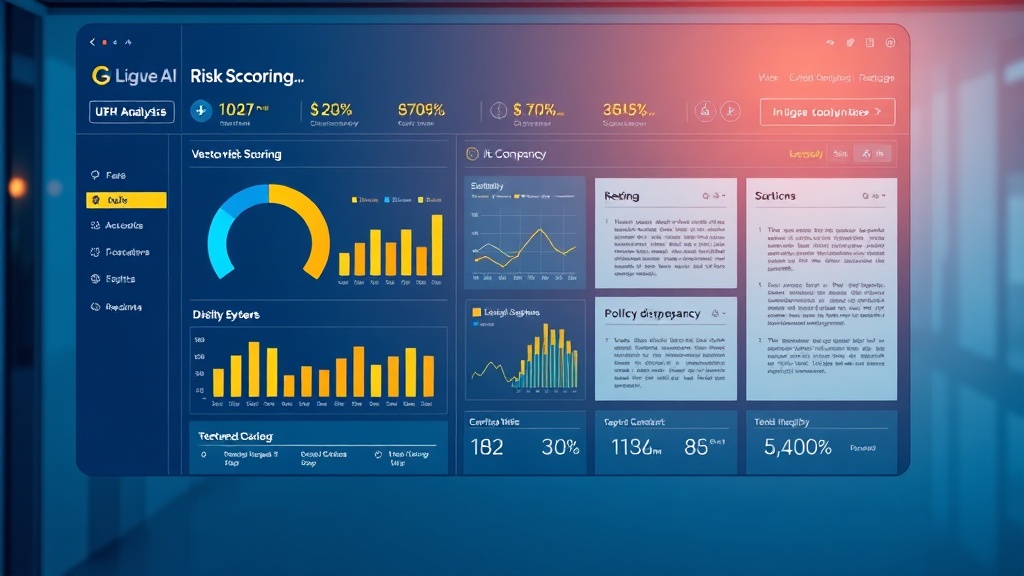
Automated AI legal assistants leverage advanced Natural Language Processing (NLP) and Large Language Models (LLMs) trained on domain-specific legal corpora. Unlike generic chatbots, enterprise-grade legal AI platforms are engineered to interpret complex legal syntax, recognize contextual nuances, and perform deep semantic analysis across vast document repositories.
During a compliance audit, these systems fundamentally shift the operational workflow:
- Comprehensive Document Ingestion and Synthesis
Instead of auditing a fraction of enterprise agreements, AI assistants can ingest, index, and analyze 100% of an organization’s active contracts and policies in hours. They extract key terms, termination clauses, data privacy commitments, and indemnification caps with high fidelity. - Automated Gap and Deviation Analysis
AI assistants can compare internal policies or standard operating procedures against external regulatory benchmarks. When an internal guideline or third-party contract deviates from mandatory statutory standards (such as a missing standard contractual clause for international data transfers), the AI flags the discrepancy, scores the risk, and suggests remediation language. - Real-Time Policy Cross-Referencing
When a regulatory update occurs, an AI assistant can instantly query the entire repository to identify which operational practices or vendor relationships are affected. This allows compliance teams to initiate targeted, proactive internal audits rather than waiting for annual review cycles.
Key Benefits: Precision, Speed, and Continuous Compliance
Integrating AI legal assistants into audit workflows delivers measurable operational and strategic returns:
- Shift to Continuous Assurance: Instead of conducting episodic, backward-looking audits, organizations can maintain a state of continuous compliance. Transactions, contract executions, and data flows can be monitored near real-time, catching compliance breaches before they trigger regulatory penalties.
- Drastic Reduction in Review Time: Organizations routinely report an 70% to 85% reduction in the time required to complete audit discovery phases, allowing legal teams to clear backlogs and accelerate transaction cycles.
- Higher Audit Accuracy: AI systems do not experience fatigue. By standardizing the evaluation criteria across all documents, AI legal assistants eliminate the human variability that often leads to overlooked non-compliance risks.
Best Practices for Integrating AI into Compliance Operations
While the capabilities of AI legal assistants are profound, successful deployment requires rigorous governance and structural safeguards.
- Maintain a Human-in-the-Loop (HITL) Architecture: AI is an assistive technology, not an autonomous legal entity. Strategic decisions, risk acceptance, and formal regulatory attestations must remain under the stewardship of qualified legal and compliance professionals. AI flags and recommends; human counsel decides.
- Prioritize Data Privacy and Security: Enterprise audit data contains sensitive intellectual property and regulated personal information. Organizations must ensure that any deployed AI model operates within zero-data-retention environments, enterprise-grade encryption standards, and private cloud infrastructures that do not use proprietary company data for external model training.
- Insist on Explainability and Audit Trails: Regulators will not accept a “black box” justification for compliance. Deployed AI solutions must provide traceable audit trails, clearly citing the exact source documents, clauses, and analytical logic behind every flagged issue.
The Strategic Path Forward
Automated AI legal assistants are redefining the parameters of what is possible in corporate governance. By automating the data-heavy, repetitive components of compliance audits, organizations not only insulate themselves against catastrophic regulatory penalties and reputational harm, but they also liberate their legal talent to focus on high-value strategic growth.
Just as deploying AI automation for small business KPIs eliminates administrative friction in HR, implementing automated AI legal assistants secures corporate governance across the entire enterprise. As the corporate regulatory environment grows increasingly intricate, deploying automated AI legal assistants is no longer merely a competitive advantage—it is an operational necessity.