In the fast-paced world of B2B sales, lead scoring automation is the ultimate competitive advantage. Currently, sales representatives routinely spend up to 50% of their working hours chasing unqualified leads that never convert. Traditional lead generation engines often deliver quantity over quality, leaving revenue teams overwhelmed by cluttered pipelines and missed revenue targets.
To break this cycle, modern revenue organizations are turning to artificial intelligence. By automating lead scoring through predictive intelligence, forward-thinking sales teams are eliminating guesswork, streamlining operations, and dramatically accelerating pipeline velocity.
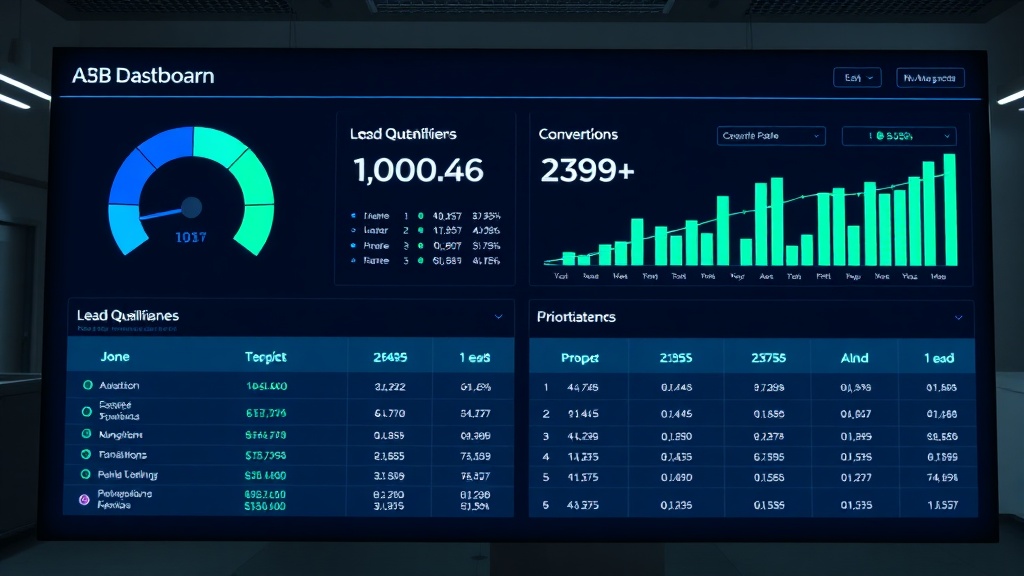
The Inherent Flaws of Manual Rules vs. Lead Scoring Automation
For years, marketing and sales teams have relied on point-based, manual scoring models. In these legacy setups, prospects are assigned arbitrary points: 10 points for downloading a whitepaper, 20 points for visiting the pricing page, and 5 points for opening an email.
While this system was an improvement over no scoring at all, it harbors significant structural flaws:
- Static and Rigid: Human-configured rules fail to adapt to changing market dynamics or shifting buyer journeys.
- Subjective Metrics: Point values are typically assigned based on internal assumptions rather than empirical data on what actually drives closed-won revenue.
- False Positives: A student conducting research might accumulate enough points to be classified as a Sales Qualified Lead (SQL), wasting a representative’s valuable outreach capacity.
- The Decay Problem: Traditional models struggle to account for lead decay, treating activity from six months ago with the same urgency as activity from six minutes ago.
The result is friction between marketing and sales, diminished trust in lead quality, and bloated pipelines full of dead ends. Modern lead scoring automation eliminates manual spreadsheet triage and routes hot prospects directly to senior account executives.
How AI-Driven Lead Scoring Redefines Prioritization
AI-driven lead scoring replaces static rules with dynamic, predictive machine learning algorithms. Instead of relying on guesswork, these systems analyze historical deal data—both wins and losses—to identify the multi-dimensional patterns that correlate with high purchase intent.
Rather than evaluating actions in isolation, an AI engine considers the context, sequence, and timing of prospect interactions. It evaluates hundreds of variables simultaneously, including:
- Firmographic and Demographic Data: Company size, industry vertical, annual revenue, tech stack, and the prospect’s specific role.
- First-Party Behavioral Engagement: Frequency and depth of website visits, content consumption, webinar attendance, and product trial usage.
- Third-Party Intent Signals: External research activity, peer review site visits, funding announcements, and hiring surges.
As prospects interact with your brand across multiple touchpoints, the AI model recalculates scores in real time, giving sales reps an accurate, continually updated snapshot of buying readiness.
Tangible Impacts on Sales Pipeline Efficiency
Integrating automated AI scoring directly into your CRM or revenue operations platform delivers immediate operational gains across the entire sales cycle.
Instantaneous Speed-to-Lead
When a high-value prospect demonstrates active buying intent, minutes matter. Automated scoring triggers instant workflows: flagging the lead, matching it to the optimal account executive based on territory or expertise, and scheduling automated follow-ups. Reducing response times from hours to minutes significantly increases initial meeting conversion rates.
Elimination of Administrative Overhead
Sales reps lose hours each week manually vetting leads and researching accounts. AI automation surfaces qualified prospects directly into the rep’s daily view, complete with context regarding *why* the lead scored high (e.g., “Increased visit velocity to security documentation + hiring for DevOps”). This allows reps to personalize their outreach immediately without extensive manual discovery.
More Accurate Pipeline Forecasting
Revenue leaders often struggle with pipeline visibility. Because AI scoring objectively ranks deal viability, sales forecasts become grounded in statistical probability rather than rep optimism. Leaders can easily spot stalled deals, identify pipeline coverage gaps, and allocate resources where they will generate the greatest return.
Continuous Model Optimization
Unlike legacy systems that require manual audits, machine learning models continuously learn from every closed-won and closed-lost deal. Over time, the algorithm refines its predictive capability, capturing emerging buyer trends and adjusting weights automatically.
Best Practices for Rolling Out Automated Scoring
Deploying AI-driven lead scoring is not simply an IT upgrade; it requires organizational alignment. To ensure high adoption and tangible ROI, focus on the following strategies:
- Audit and Clean Your Data: Machine learning models are only as good as the data feeding them. Eliminate duplicate contacts, fill missing firmographic fields, and ensure clean tracking across your digital properties before training the model.
- Foster Sales and Marketing Alignment: Both teams must agree on what constitutes a qualified lead. Involve sales reps early in the rollout to review scoring drivers and ensure the model mirrors real-world sales conversations.
- Adopt an Explainable AI Approach: Reps will ignore scores if they don’t understand the rationale behind them. Choose a solution that provides clear scoring factors (e.g., displaying top positive and negative attributes) so reps know what conversation angles to leverage.
- Maintain a Feedback Loop: Build mechanisms for reps to flag false positives. If an account scored 95/100 turns out to be unqualified due to an unmodeled variable, that feedback should train the model to be smarter in the future.
Accelerating Revenue with Intelligence
Scaling revenue effectively is rarely about adding more leads into the top of the funnel; it is about accelerating the right leads through the middle. AI-driven lead scoring transforms the sales pipeline from a crowded queue into a streamlined, automated engine focused purely on high-probability opportunities. Ultimately, adopting lead scoring automation transforms unpredictable sales pipelines into repeatable revenue engines.
By removing administrative friction, reducing lead response times, and empowering reps to focus their energy where it matters most, automated lead scoring is no longer just an operational advantage—it is an essential requirement for modern, high-performing sales teams.
Combining AI-driven lead scoring automation with agentic AI workflows for customer routing ensures high-intent B2B prospects reach the right sales representative instantly. Ultimately, adopting lead scoring automation transforms how B2B revenue teams prioritize prospects—proving that modern lead scoring automation is essential for scaling predictable sales growth.